

What changes with a Pawsitivity hearing service dog
A Pawsitivity hearing service dog helps veterans with hearing loss live with greater awareness, safety, and independence. Veterans partnered with hearing service dogs are better able to respond to sounds they cannot hear, move confidently through public spaces, and remain connected to their surroundings.
For many veterans, this support reduces isolation and increases confidence at home and in the community.
Living with hearing loss
Hearing loss is one of the most common service-connected disabilities among veterans. It can affect communication, safety, and independence in daily life. Missed alarms, unheard announcements, and difficulty navigating public spaces can create ongoing stress and limit participation.
Veterans with hearing loss may withdraw socially, avoid unfamiliar environments, or rely heavily on others to interpret sounds around them.
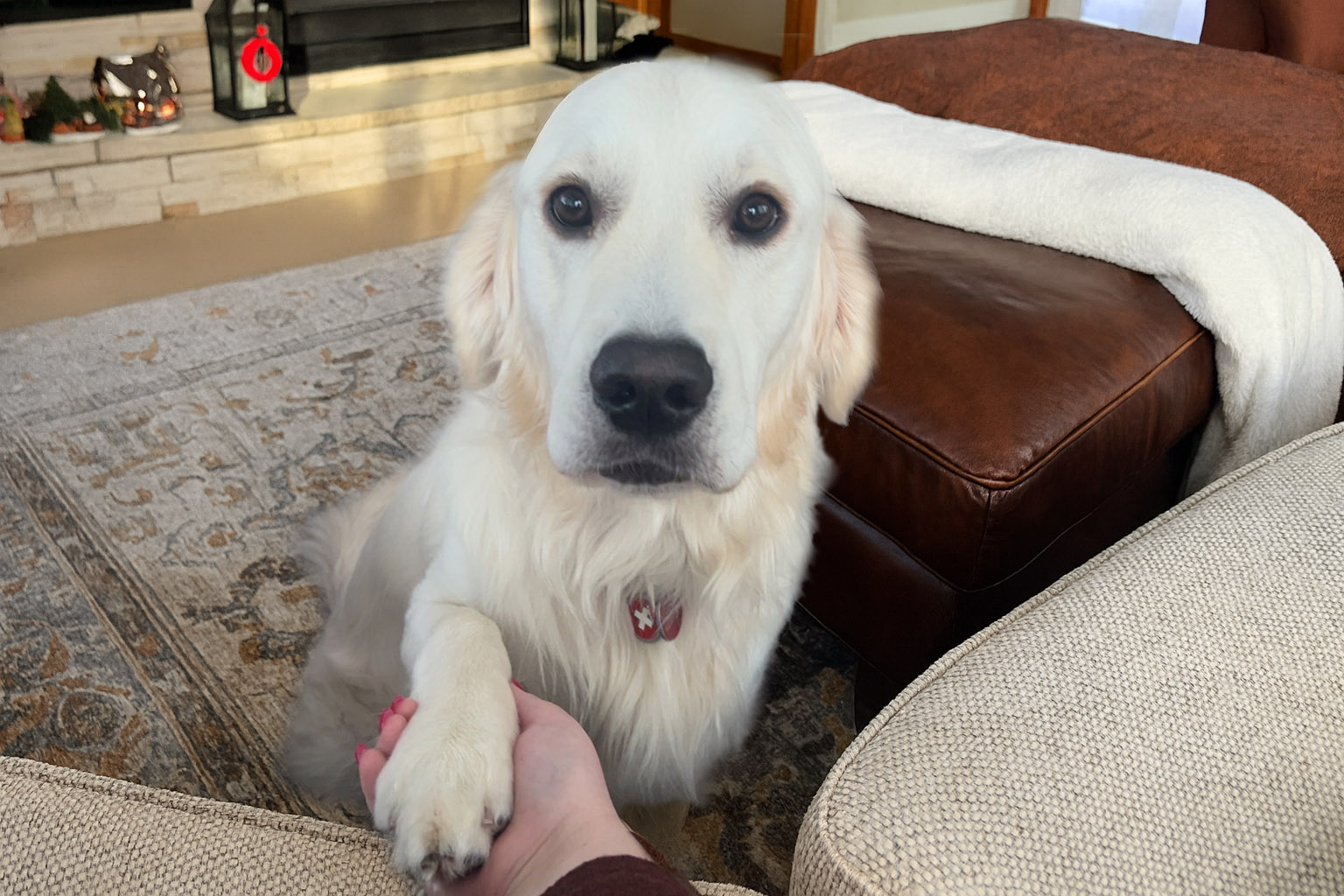
A hearing service dog uses touch to get its handler’s attention when important sounds occur.
How a hearing service dog helps
Pawsitivity hearing service dogs are trained to alert veterans to important sounds and guide them to the source of those sounds. These alerts help veterans remain aware of their environment and respond more quickly when something needs attention.
Depending on the veteran’s needs, a hearing service dog may be trained to:
-
Alert to doorbells, knocks, and alarms
-
Alert to phones, timers, and other household sounds
-
Alert to approaching vehicles or people when outside
-
Lead the veteran to the source of the sound
-
Provide consistent environmental awareness in public settings
These trained behaviors support safety, communication, and independence.
Support in daily life and public settings
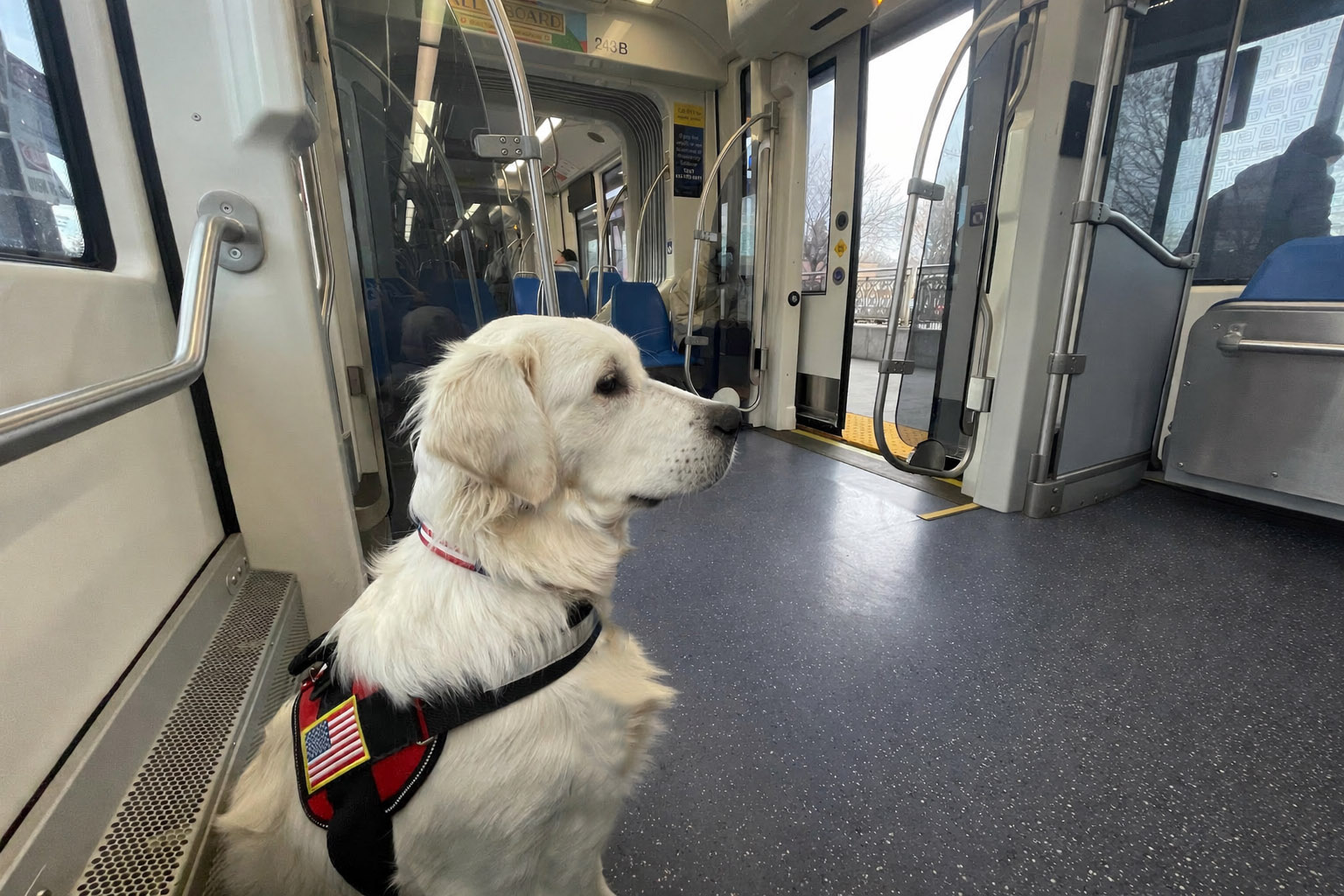
Hearing loss can make public spaces especially challenging. Announcements, warnings, and environmental cues are often auditory. Pawsitivity hearing service dogs are trained to work reliably in real-world environments such as stores, transportation, workplaces, and medical facilities.
Public-access training allows veterans to navigate these spaces with greater confidence, knowing they will be alerted to important sounds they might otherwise miss.
Documenting the Benefits
The journal, "Deaf Studies and Deaf Education" did a study[2] that found that the handlers showed:
- A large reduction in hearing-related problems.
- A decrease in tension, anxiety, and depression.
- An increase in social involvement and independence
Another study[3] found that a hearing service dog:
- Reduced their dependency on other people.
- Reduced the hours of paid assistance needed.
- Had a major positive impact on their handlers.
77% of people with a hearing service dog reported that it is easier to leave their home with their service dog.
Studies also show that hearing service dogs support:
- Social connection
- Psychological well-being
- Personal safety
- Improved relaxation
- Overall health
- Greater independence and social involvement
- Activities of Daily Living (ADLs), including chores, self-care, and mobility at home and in the community
The study concluded that getting a hearing service dog would help a person with hearing loss:
"(1) be healthier, (2) be more physically independent, (3) function better, (4) be more mobile, (5) participate more in productive activities, and (6) be more satisfied with life."
Improve Success in the Workplace
For veterans with hearing impairments, service dogs provide essential support at work. A study[4] found that the benefits of having a service dog at work far outweigh any challenges, improving productivity and relationships.
|
“The service dog gives me an overall sense of security and independence. I am not as afraid to go into a public area where I can be vulnerable.” -Pawsitivity client, quoted in our independent, third-party Impact Evaluation. |
Training approach
All hearing service dogs are trained using positive, force-free methods. Training focuses on clear sound discrimination, reliable alert behaviors, and calm performance in real-world environments.
Each placement is customized based on the veteran’s hearing loss, lifestyle, and daily routines. Training continues beyond placement, with ongoing support to help each team succeed over time.
Service dogs are placed at no cost to the veteran.
Why this matters
Hearing service dogs do not restore hearing. They provide practical, daily support that helps veterans remain aware, engaged, and safe in environments designed for people who can hear.
For many veterans, this support restores independence and reduces the isolation that often accompanies hearing loss.
Help train a hearing service dog
Training a hearing service dog requires time, expertise, and long-term follow-up. Your support helps ensure veterans receive well-trained partners who provide reliable alerts, safety, and confidence in daily life.
References
[1] Schmidt et al., 2018; U.S. Dept of Veterans Affairs data.
[2] "Hearing Dogs: A Longitudinal Study of Social and Psychological Effects on Deaf and Hard-of-Hearing Recipients," Claire M. Guest, along with Glyn M. Collis and June McNicholas.
[3] "Effects of assistance dogs on persons with mobility or hearing impairments," Diana H. Rintala, PhD; Rebeca Matamoros, BS; and Laura L. Seitz.
[4] "An Exploratory Study of the Elements of Successful Service Dog Partnerships in the Workplace," Margaret K. Glenn.