
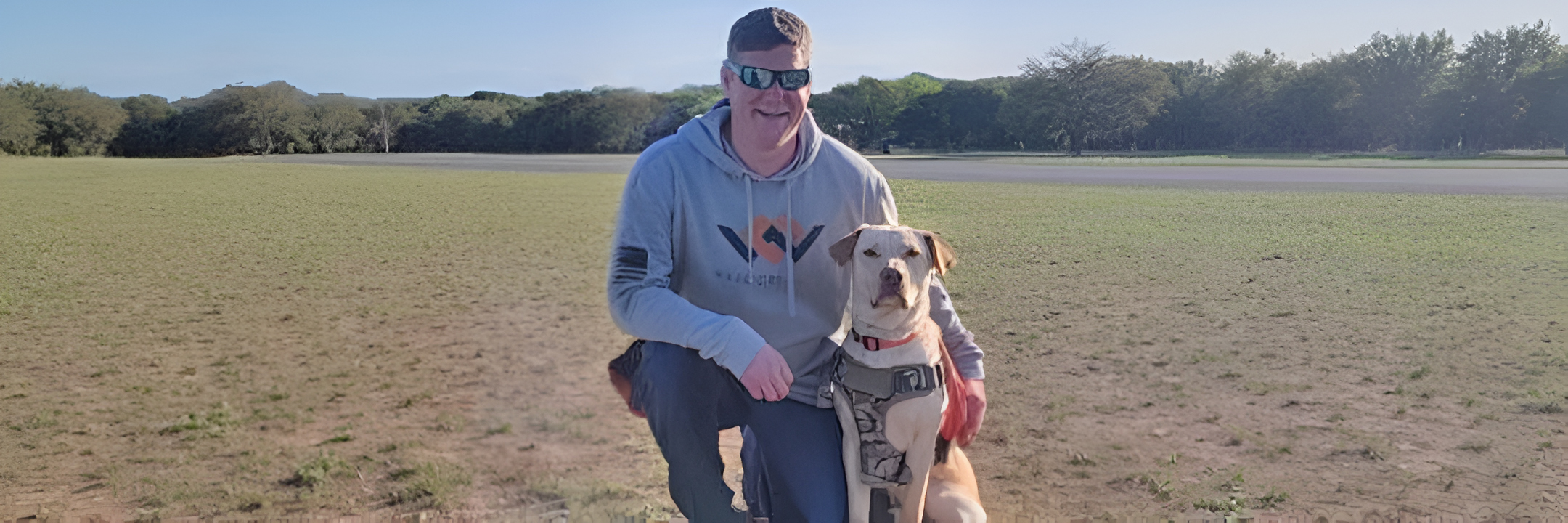
What changes with a Pawsitivity service dog
A Pawsitivity service dog helps veterans with PTSD feel safer, more grounded, and better able to manage daily life. Veterans report fewer panic episodes, improved sleep, and greater confidence navigating public spaces and everyday routines.
Instead of avoiding situations or constantly scanning for danger, veterans are better able to leave the house, focus on tasks, and stay engaged with family and community.
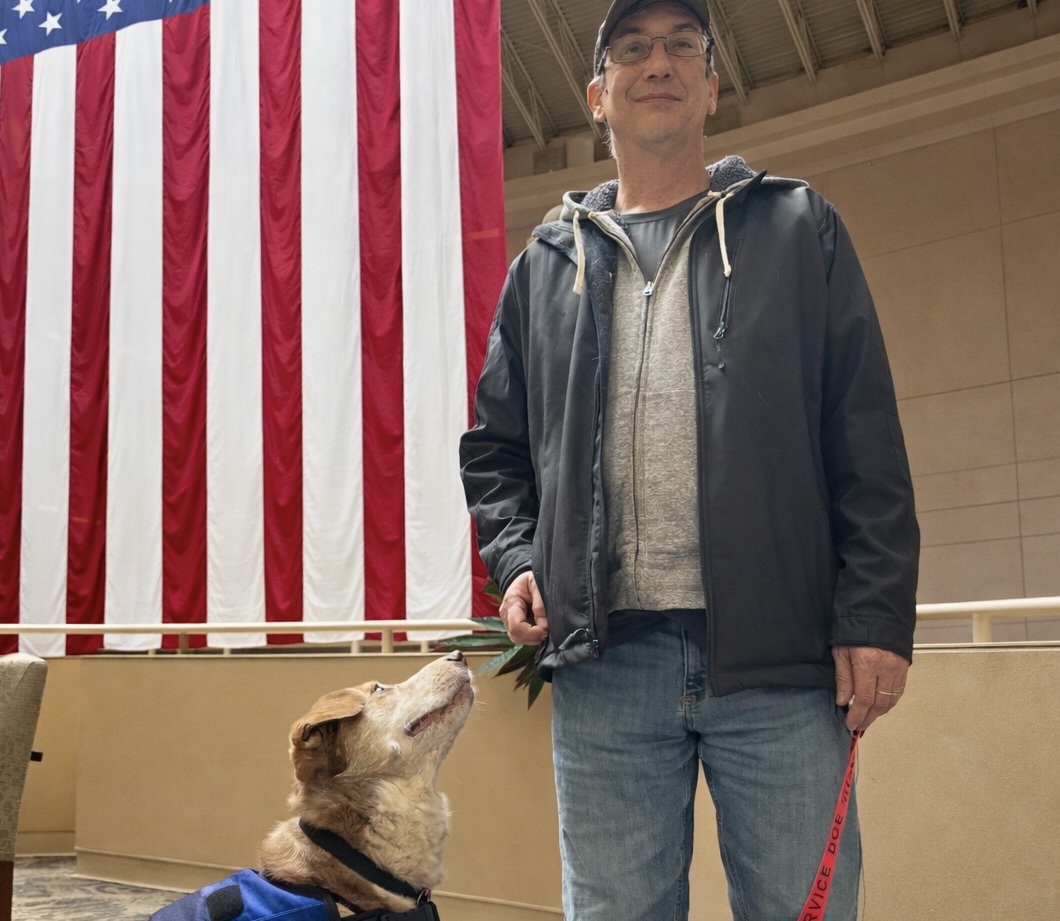
How PTSD affects daily life
Post-traumatic stress disorder can make ordinary situations feel unpredictable or unsafe. Veterans with PTSD may experience anxiety, hypervigilance, panic responses, disrupted sleep, and difficulty concentrating. Over time, these symptoms can interfere with work, relationships, and independence.
Many veterans describe feeling “on edge” even in calm environments, which can lead to isolation and exhaustion.
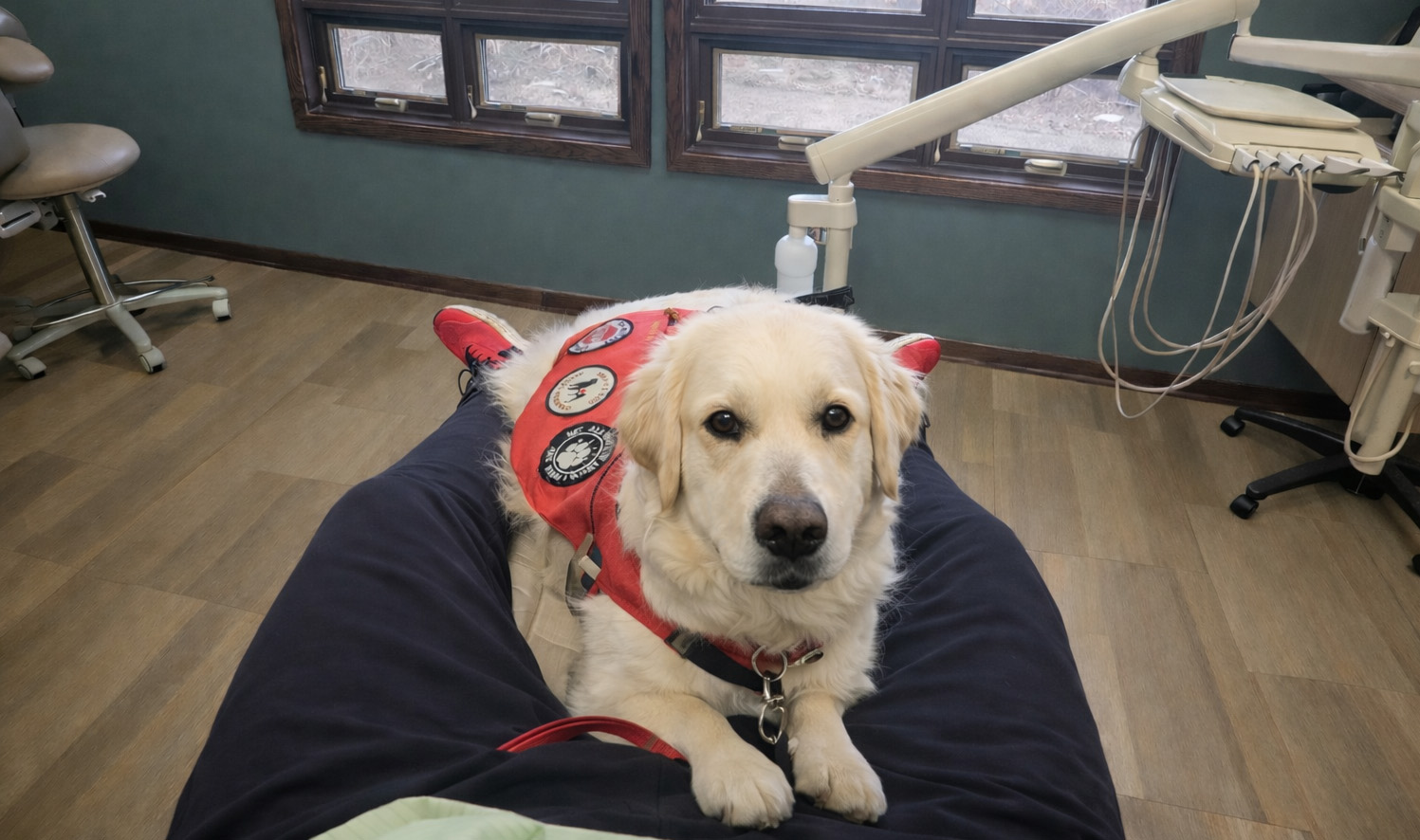
Service dog doing "Lap" at dentist
How a service dog helps
Pawsitivity service dogs are trained to recognize early signs of distress and respond in ways that help interrupt escalation and restore a sense of safety. The dog’s consistent presence provides predictable, nonjudgmental support throughout the day.
Depending on the veteran’s needs, a PTSD service dog may be trained to:
-
Interrupt anxiety or panic behaviors
-
Provide grounding through physical contact
-
Create personal space in crowded or overstimulating environments
-
Wake a veteran from nightmares
-
Perform trained behaviors that reduce hypervigilance, such as “watch my back”
These responses help veterans remain present instead of withdrawing when symptoms appear.
➡️ Learn more about the specific tasks PTSD service dogs are trained to perform
Support in real-world settings
PTSD symptoms do not only occur at home. Pawsitivity service dogs are trained to work reliably in public environments where symptoms are often triggered, including stores, appointments, transportation, and community settings.
This public-access reliability allows veterans to participate more fully in daily life rather than planning around avoidance.
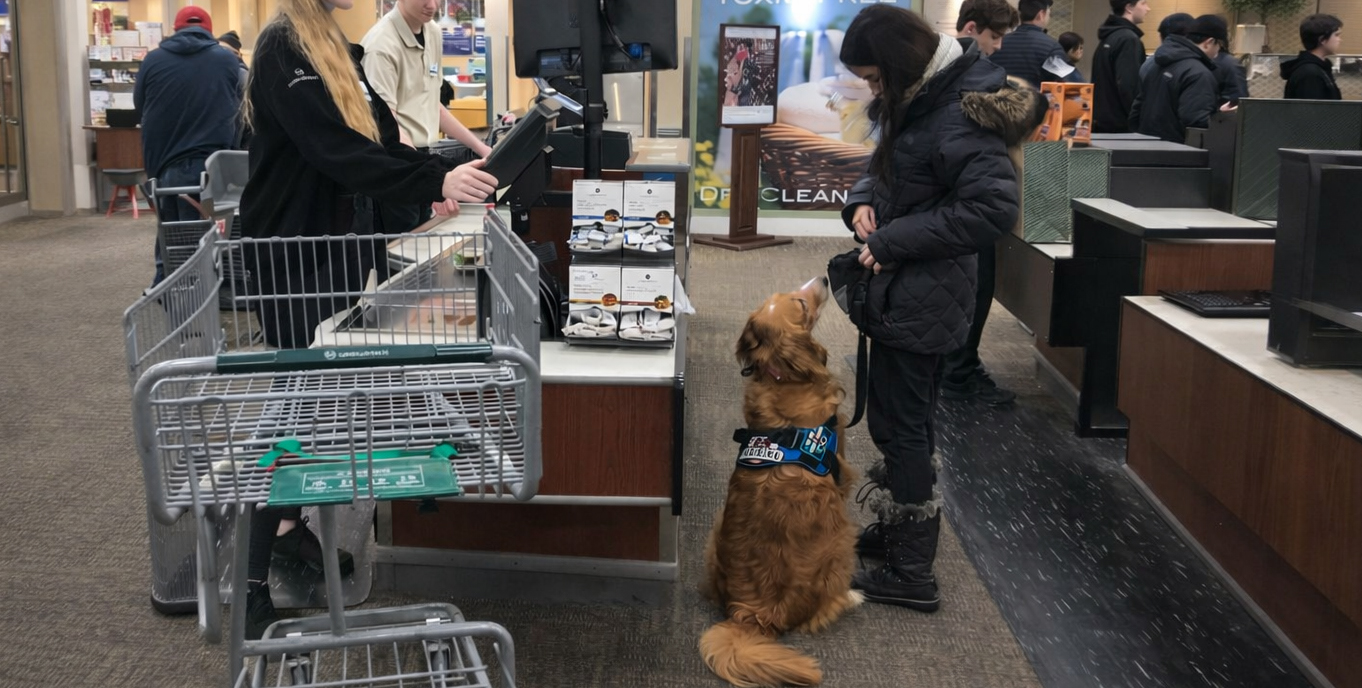
Focused public-access work is a core part of PTSD service dog training.
Evidence-based benefits
Veterans working with PTSD service dogs often report:
-
Reduced severity of PTSD symptoms
-
Improved sleep
-
Better focus and emotional regulation
-
Increased independence
-
Reduced isolation and depression
In many cases, service dogs help veterans respond earlier during emotional crises and regain a sense of control over daily life.
➡️ Read more about the benefits veterans experience with PTSD service dogs
|
"The service dog gives me an overall sense of security and independence. I am not as afraid to go into a public area where I can be vulnerable." -Pawsitivity client, quoted in our independent, third-party Impact Evaluation. |
Independent research and Pawsitivity’s own Impact Evaluation show meaningful improvements in daily functioning and quality of life for veterans partnered with trained service dogs.
Training approach
All PTSD service dogs are trained using positive, force-free methods. Training emphasizes calm responsiveness, emotional steadiness, and reliability under real-world conditions.
Each placement is customized based on the veteran’s needs, routines, and triggers. Training does not end at placement. Ongoing support is provided to help each team succeed over time.
Service dogs are placed at no cost to the veteran.
Why this matters
PTSD service dogs do not replace treatment. They provide practical, day-to-day support that helps veterans apply coping skills in the moments they are needed most.
For many veterans, the result is not just symptom management, but greater independence, confidence, and engagement in daily life.
Help train a PTSD service dog
Training a service dog requires time, expertise, and resources. Your support helps cover individualized training, veterinary care, and long-term follow-up so veterans receive reliable, well-prepared partners.