

Pawsitivity designs and delivers specialized service dog programs for U.S. military veterans with disabilities.
We focus on veterans with complex needs, including PTSD and co-occurring conditions such as epilepsy, deafness, or blindness. Every team receives individualized training and ongoing support.
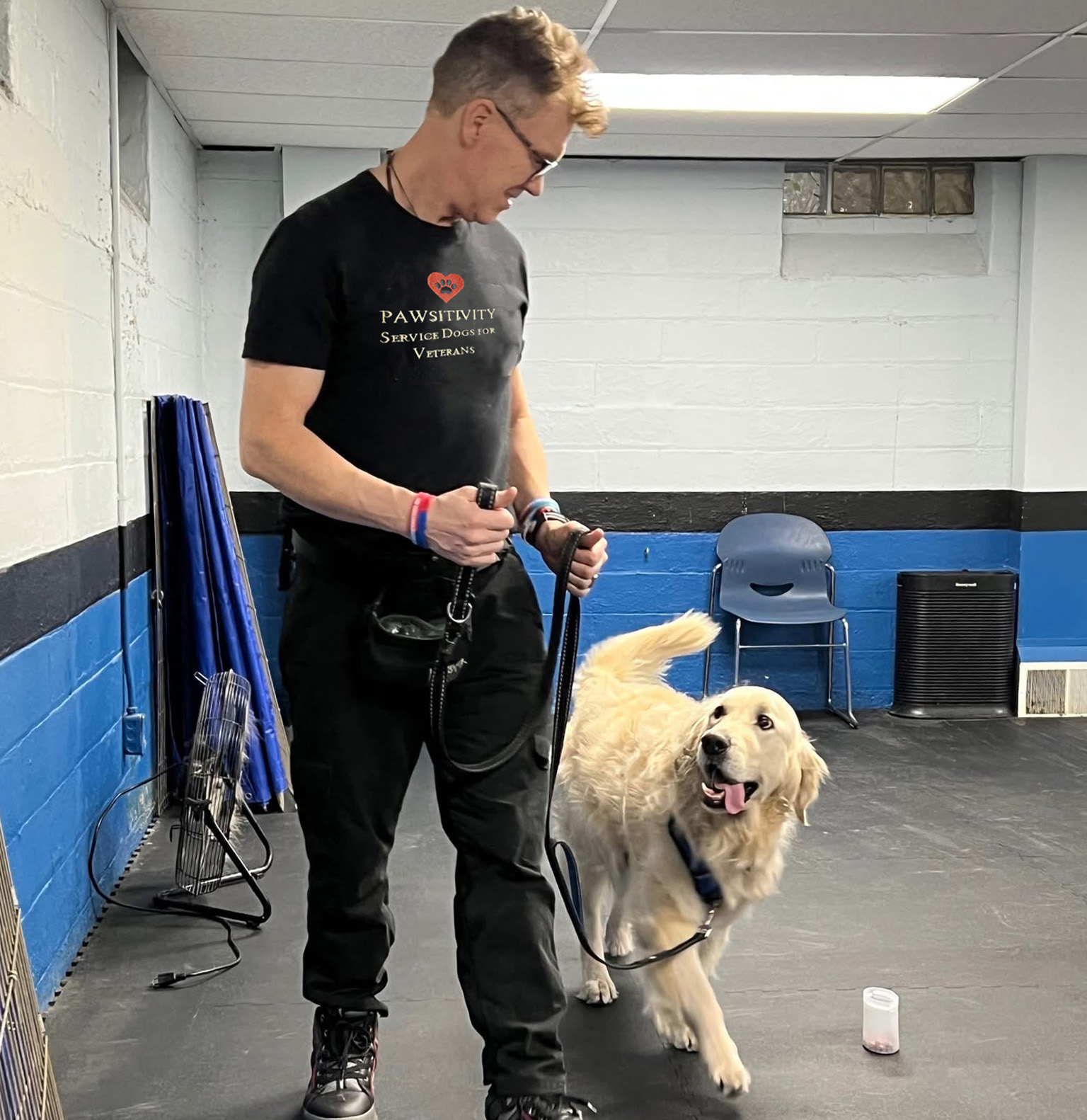
Training a future service dog
Pawsitivity’s core mission is training service dogs for U.S. military veterans with PTSD and other disabilities. Our primary program areas include PTSD, seizures, deafness, and blindness.
Our programs are designed for veterans. In rare cases, and only when capacity allows, we may train a service or helper dog for a non-veteran whose needs closely align with our veteran-focused model. Learn about our application process.
Expanding Impact Beyond Direct Placements
In addition to training service dogs for veterans, Pawsitivity strengthens the broader service dog field by sharing practical tools and training.

-
Training other service dog providers:
We teach other providers how to train service dogs and how to work effectively with people with disabilities. Our curriculum is also reflected in our award-winning textbook, Service Dogs: The Rescue and Training of Heroes (2016 Midwest Book Award). -
Helping rescues:
We support rescue partners with guidance and hands-on resources to identify dogs with strong potential for service dog training and place dogs in the right homes. We also developed Good Dog!, a mobile tool designed to help shelter staff spot service-dog-ready traits earlier in the process. -
Sharing with educators:
We share our methods with educators through workshops and trainings. Our Theory of Change and Logic Model are published on ResearchGate so researchers and nonprofit leaders can reference and build on the approach.
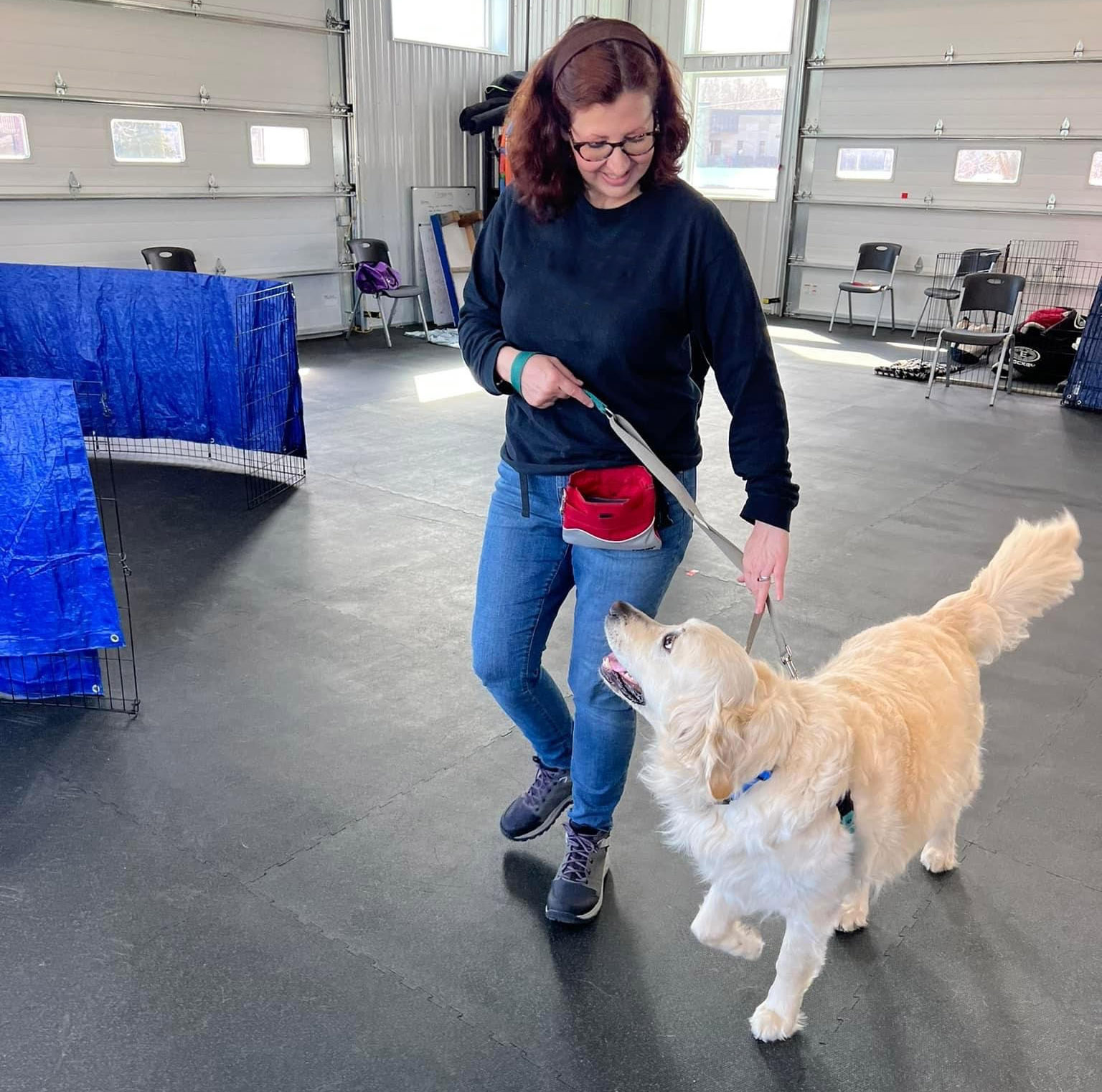
Training
Service dogs are matched with veterans based on their specific needs, ensuring a perfect partnership. Training includes:
- Stress alerts: Dogs are trained to recognize and interrupt rising anxiety
- Public readiness: Dogs practice navigating public spaces, creating safe zones, and interacting appropriately.
- Daily support tasks: Veterans are trained to use their dog as a grounding tool during panic attacks or flashbacks.
|
We use a four-stage training program. The entire process takes one to two years, and each stage is critical to preparing a well-trained, reliable service dog.
|

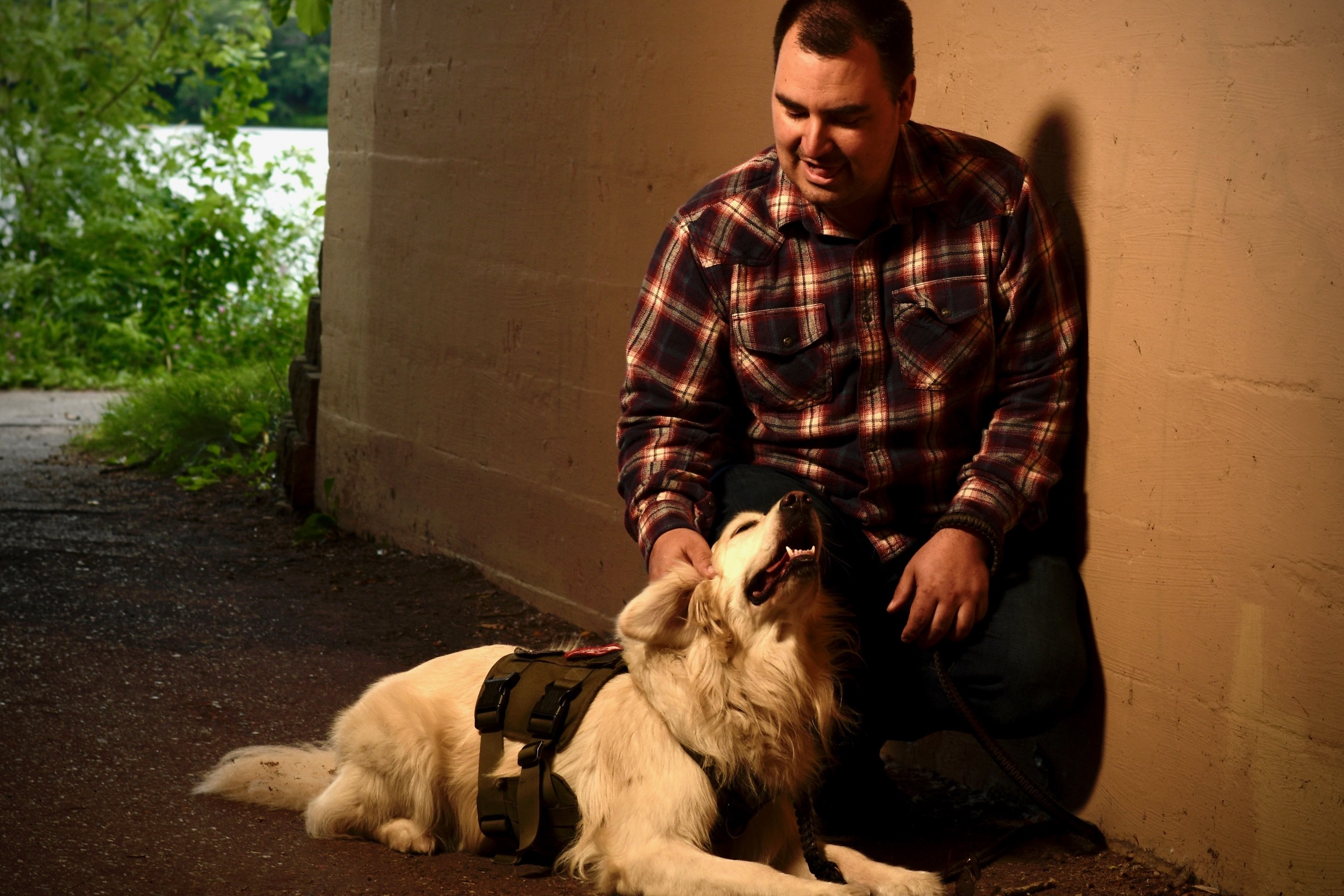
Why So Much Emphasis on PTSD?
We will work with any disability, but the most common ones are PTSD, often co-morbid with TBI.
Veterans of Iraq and Afghanistan wars often face PTSD and Traumatic Brain Injuries (TBI)[1]. While improved torso protection has increased survival rates, many veterans live with head injuries and PTSD as a result of blasts.
PTSD intensifies the effects of other disabilities and creates strong reactions to specific triggers, such as loud noises, crowds, or certain sounds. Service dogs can alert to rising emotions and provide comfort, grounding, and protective behaviors..
Real Stories of Impact
“My service dog has helped me a lot in the middle of my panic attacks...I’ll start petting her and focusing all of my energy on her rather than directing it at myself, which makes feeling anxiety attacks a lot easier. They don’t last quite as long. She’s really helping.” – Program client
Sources
[1] Case Reports, Journal of Psychosocial Nursing and Mental Health Services, 2010 Feb;48(2):22-8. doi: 10.3928/02793695-20100107-01.