
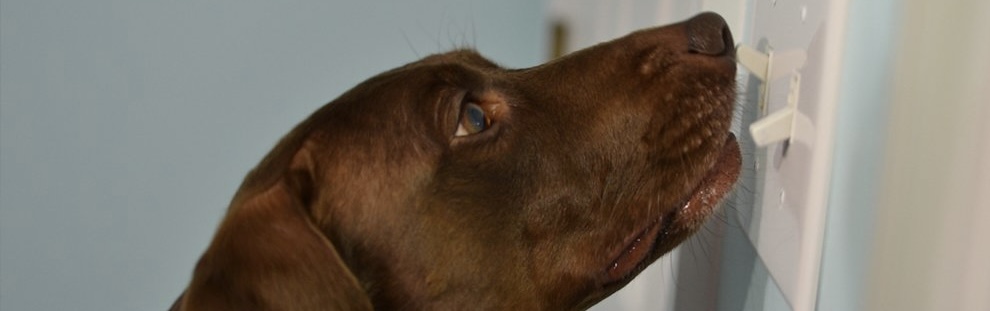
Service dogs for PTSD are task-trained. We have found that the most important task is to alert a veteran when symptoms are building toward a panic attack, giving the veteran a chance to use coping strategies and stay grounded enough to leave home and live daily life.
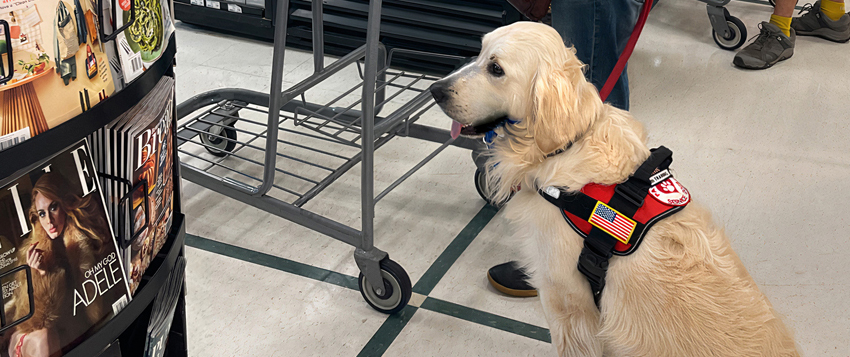
Positioning between its handler and the environment helps reduce unexpected stimuli.
Additional trained tasks for PTSD service dogs
- Creating personal space: The dog positions itself to form a buffer in lines or crowds, helping reduce startle responses and overload.
- Interrupting flashbacks: The dog uses trained tactile cues (nose nudge, paw touch, lean) to help ground the veteran in the present.
- Medication reminders: The dog alerts at scheduled times so the veteran is less likely to miss doses.
- Checking the environment: On cue, the dog helps the veteran scan or “clear” a room and then re-orients back to the handler, supporting a calmer entrance.
While doing these tasks, the dog accompanies the veteran into challenging environments (crowds, appointments, public places), making it easier to leave home and stay engaged.
How Service Dogs Address PTSD Triggers
-
Environmental Triggers:
When service dogs act as buffers in crowded spaces, this task reduces arousal levels, enabling veterans to navigate public areas with confidence. -
Trauma-Specific Triggers:
While service dogs cannot prevent triggers like helicopter sounds, they can comfort veterans during these episodes. A service dog provides a calming presence, helping veterans regain control. Even more importantly, the dog can alert the veteran to rising emotions so that ultimately, the veteran gains insight into how their emotions rise and empowers them to do something about it before the emotions go out of control. -
Secondary Interventions:
Even after a trigger occurs, service dogs can reduce its effects by grounding veterans. For example, by placing the weight of its paw or head upon the veteran, this stimulus can help bring the veteran back to the present moment.
Breaking the Cycle of Isolation
Veterans with PTSD often isolate themselves due to anxiety and fear. When a veteran know that their service dog will provide the tasks to help them through difficult situations, this knowledge enables veterans to comfortably go out in public. Whether shopping or attending events, the dog's trained tasks foster confidence.
Leveraging the Unique Abilities of Service Dogs
- Smell Sensitivity: Dogs can detect subtle scent changes that occur before seizures or anxiety spikes, offering early alerts[1].
- Hearing Acuity: Dogs can hear sounds far beyond human capability, providing assurance that the environment is safe[2].
- Emotional Stability: A constant companion, the dog reduces loneliness, fosters routines, and acts as an anchor during challenging moments.
Real Stories of Impact
“My service dog has helped me a lot in the middle of my panic attacks...I’ll start petting her and focusing all of my energy on her rather than directing it at myself, which makes feeling anxiety attacks a lot easier. They don’t last quite as long. She’s really helping.” – Pawsitivity client
Sources
[1] Complementary Therapies in Clinical Practice, Braun, C., Stangler, T., Narveson, J., & Pettingell, S. (2009). 15(2), 105-109. Also, Journal of Holistic Nursing: Official Journal of the American Holistic Nurses' Association Sobo, E. J., Eng, B., & Kassity-Krich, N. (2006). 24(1), 51-57.
[2] "How Dogs Think," Stanley Coren, Simon and Schuster, 2004.