
Why Selection Matters
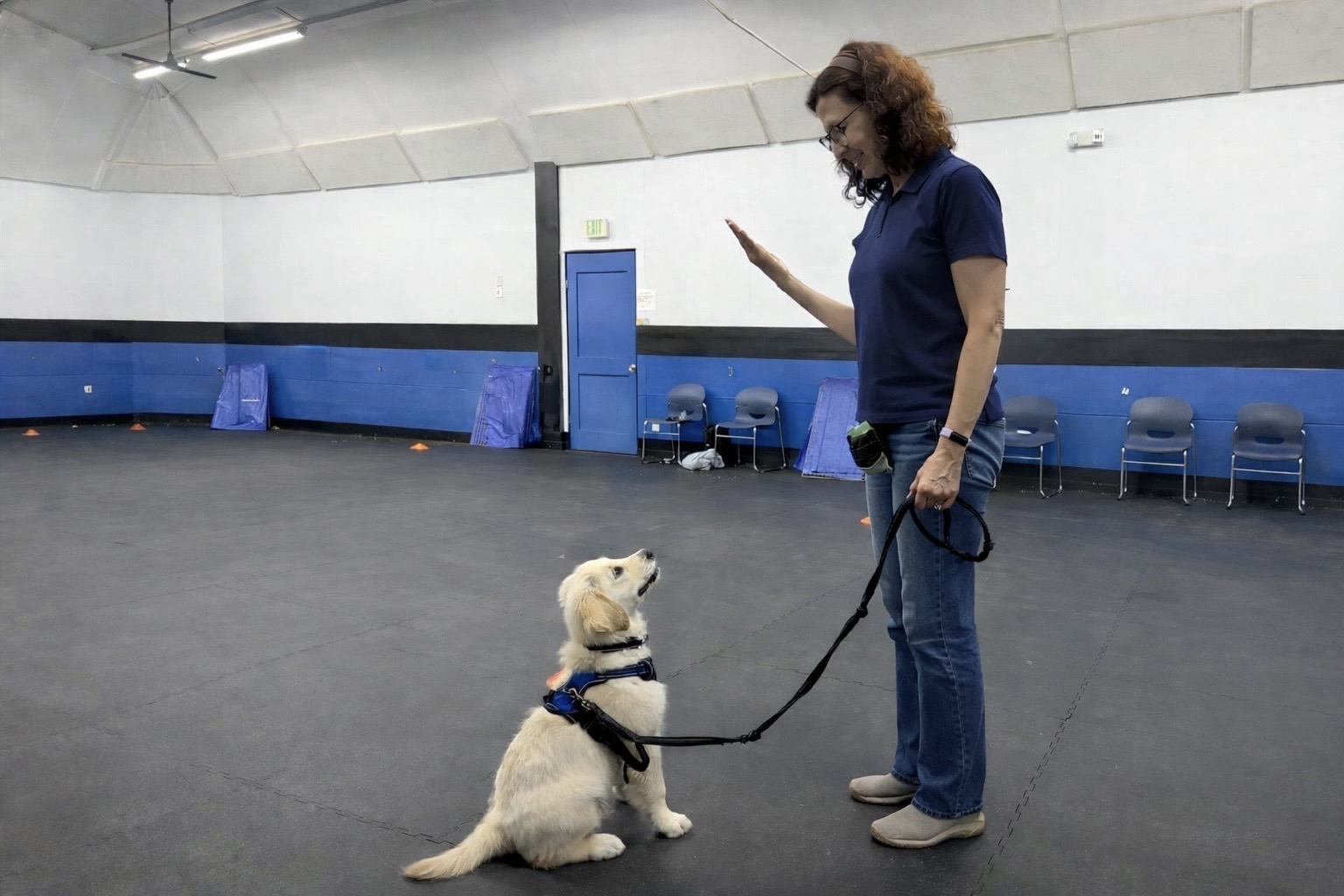
We estimate that only about one out of every thousand dogs is appropriate for service dog work. By acting very intentionally in our selection, this carefulness protects the future handler, the public, and the dog itself. Our goal is not to train as many dogs as possible. It is to train the right dogs, and to stop when a dog is not well suited for the role.
Where Dogs Come From
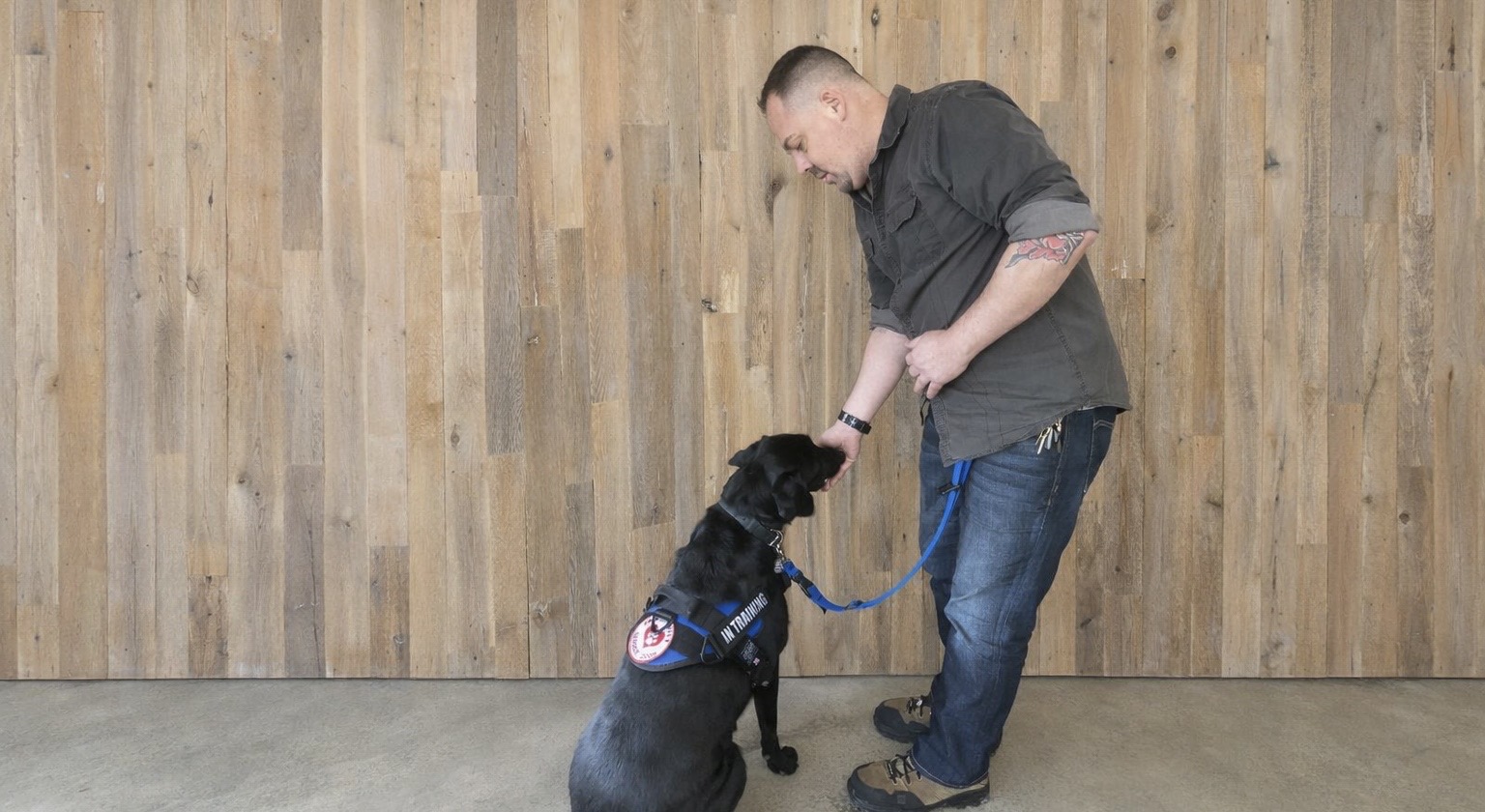
We work with dogs from two sourcing pathways: carefully selected puppies and adult rescue dogs. The pathway we choose depends on the needs of the veteran and the demands of the work, not on ideology or convenience.
Adult rescue dogs can be excellent candidates when their temperament, health, and history align with service dog work. In these cases, we focus on the individual dog rather than breed labels, using direct evaluation to determine suitability.
For some veterans, particularly those with PTSD and multiple disabilities, starting with a puppy is the better option. Beginning with a dog whose experiences are known from the start reduces the overall stress of training. It allows the veteran to focus on their own goals without also having to work through unknown prior experiences the dog may have gone through.
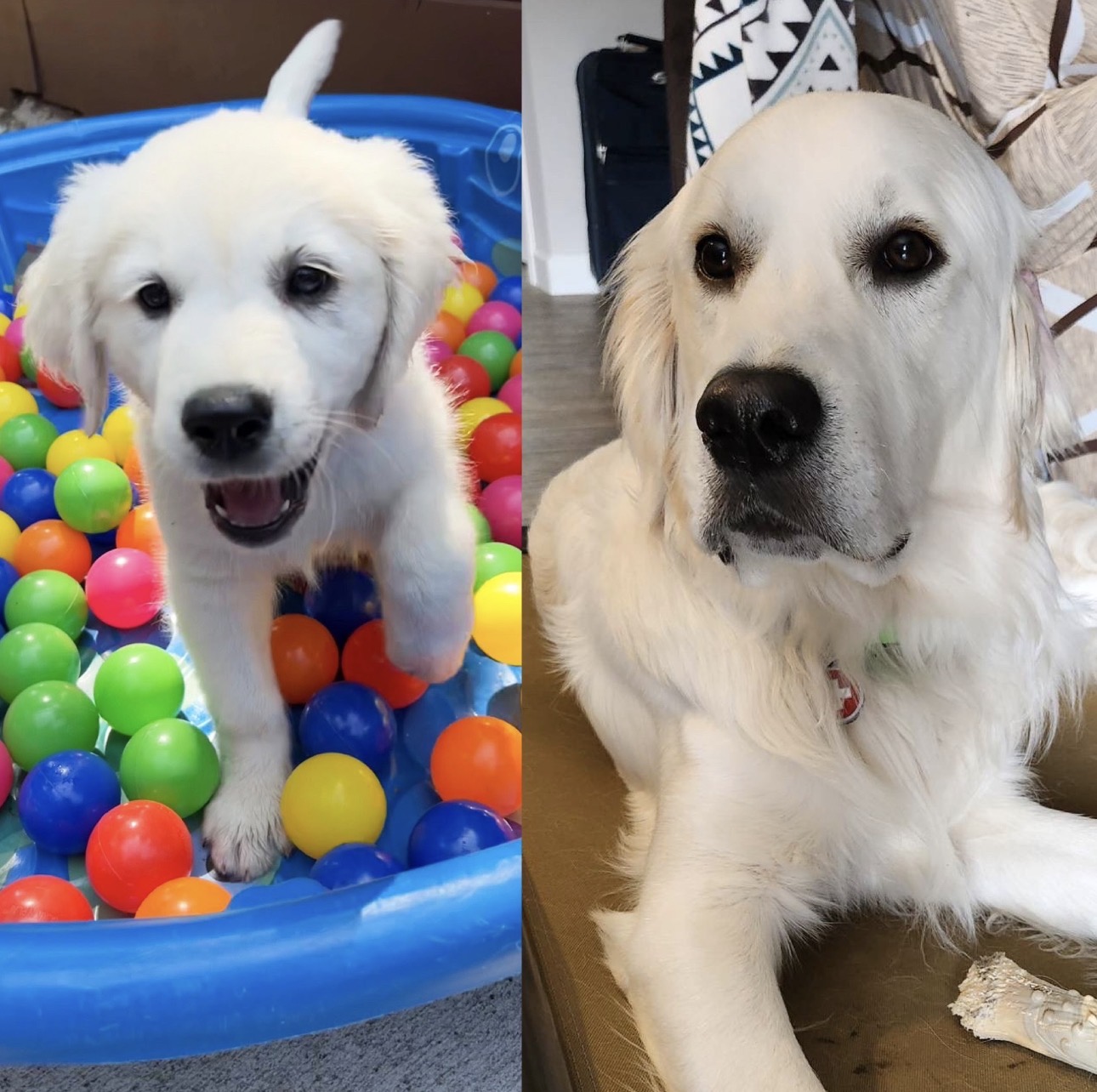
The puppies we work with come from a small number of breeders who follow structured early socialization practices. From a very young age, these puppies are introduced to unusual sounds, surfaces, movement, and novelty in a calm, controlled way. From each litter, we select the puppy that shows the rare combination of confidence, emotional steadiness, and low reactivity needed for service dog work.
Initial Evaluation and Selection
When working with adult rescue dogs, finding the right candidate dog is more complicated than it appears. Intelligence alone is not enough. In fact, traits that are valued in other working dogs, such as high drive or constant alertness, can make service dog work much harder for the dog.
We look for dogs that are unusually low in reactivity and prey drive, even if that makes them slower to train at first. Service dogs are asked to work in crowded, unpredictable environments while remaining calm, attentive, and safe. They must also live quietly in a home, and be able to spend long stretches of time resting indoors. Few dogs have the quiet confidence to thrive in this kind of life. We prioritize dogs that are gentle, emotionally steady, and able to recover quickly from surprises. At the same time, the dog must be confident enough to move through unfamiliar environments without shutting down.
Many commonly used puppy temperament tests are easy to administer but have been shown to be poor predictors of adult behavior. For that reason, for both puppies and adults, we rely on a multi-stage evaluation process. Dogs first complete an internal pre-test that screens for basic suitability, including size, health, and baseline temperament. Only a small number move forward. Even then, we watch especially carefully during the first few months of training to make sure that a particular dog is enjoying the training, even in high stimulus environments.
Training Approach
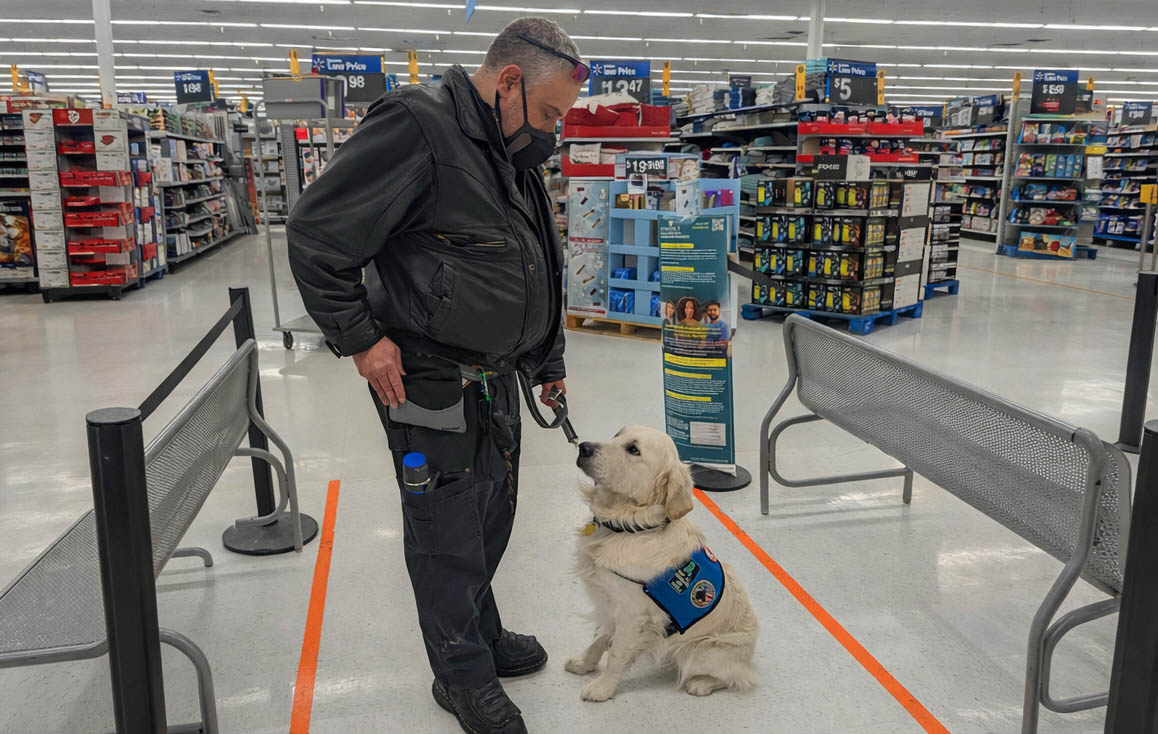
Our training approach is based on positive reinforcement and clear communication. We use markers, rewards, and structure to help dogs understand what is expected of them. This method builds reliability while protecting the dog’s emotional well-being.
Training takes place in real-world environments. Dogs learn to remain calm in public spaces, to ignore distractions, and to focus on their handler even when nothing is happening. A large part of training involves teaching the dog how to rest appropriately. Service dogs must be able to settle quietly for long periods and then respond when needed.
Progress is gradual. Behaviors are introduced slowly and reinforced over time. We do not rush dogs through training stages, and we adjust expectations based on the individual dog rather than a fixed timeline.
Why Most Dogs Do Not Graduate
Even with careful selection, many dogs do not complete service dog training. Across the field, it is estimated that only about half of dogs entering training progress to full service dog placement. This reflects the reality that service dog work is demanding.
Some dogs find the work stressful. Others struggle with sustained focus or the expectations of public access. When a dog shows signs that the work is not a good fit, we do not push forward. Continuing would make the dog’s life harder, not better.
Deciding to release a dog from training is an ethical choice. It protects the dog’s welfare and ensures that only dogs who are comfortable in the role are placed with handlers. Dogs that do not graduate (we call them "career change dogs") are redirected to more appropriate homes or roles whenever possible.
Ongoing Assessment and Placement Readiness
Evaluation does not end once training begins. Dogs are continuously assessed throughout the process. Trainers watch for changes in behavior, stress signals, and overall well-being. A dog must demonstrate consistency across environments and over time.
Placement decisions are made with both the dog and the veteran in mind. A dog that is technically capable may still not be the right match for a particular lifestyle or set of needs. We take time to ensure that a placement is sustainable for both.
After placement, support continues. Both service dogs and their veterans naturally change over time, and ongoing guidance helps maintain the team’s success. This long-term perspective reflects our responsibility to the dogs we train and the veterans we serve.
This careful, long-term approach is why training a single service dog takes significant time and resources.
Learn more
➡️ Why service dogs work so well for veterans
➡️ Independent Impact Evaluation
➡️ What's the best way to train a service dog?
➡️ A brief history of service dogs
➡️ What breeds make the best service dogs?
➡️ Steps for a veteran to get the new 8-Digit service dog ID Code (SVAN ID) for airline flights